The Exhaustion of Filtration Media: When to Replace Water Filters
Understanding the lifespan of activated carbon, reverse osmosis membranes, and refrigerator cartridges.
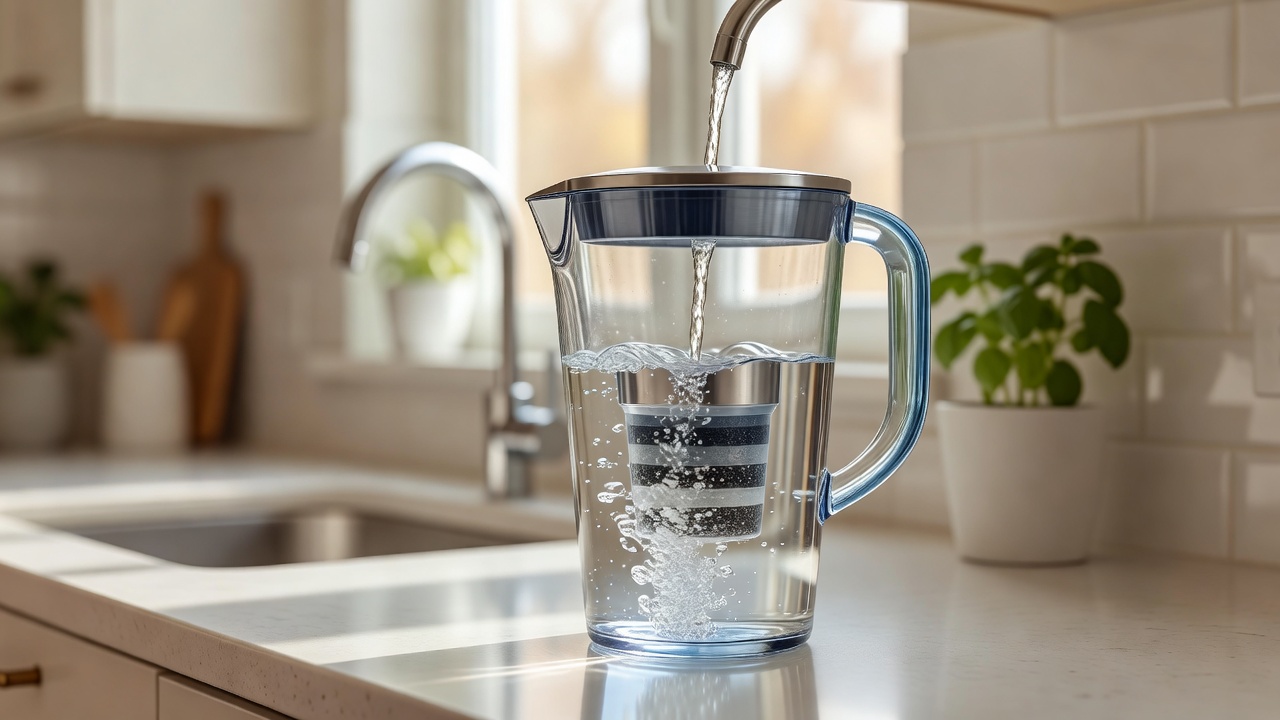
Water filtration is a mechanical and chemical process, not a magical one. When household water passes through a modern filter—whether it is seated in a countertop pitcher, built into a refrigerator dispenser, or installed under the sink—it relies on finite physical surfaces to capture impurities. The most common medium, activated carbon, possesses a vast network of microscopic pores that trap contaminants like chlorine, volatile organic compounds, and certain heavy metals through a process called adsorption. However, these pores are strictly limited in volume.
The failure to replace a water filter on schedule is one of the most widespread oversights in domestic maintenance. Homeowners often wait until the water flow slows to a trickle or the taste explicitly degrades. By the time these symptoms appear, the filtration media is likely not only exhausted but potentially serving as a breeding ground for bacteria.
The Mechanics of Exhaustion
Activated carbon works because its surface area is remarkably large relative to its mass. As water flows over and through the carbon block or granules, contaminants bind to the carbon's surface. Once all the binding sites are occupied, the filter reaches its capacity. At this point, the filter does not simply stop working; in some cases, the pressure of the water can cause the filter to release previously trapped contaminants back into the water stream—a phenomenon known as "desorption."
Furthermore, because domestic water filters remove the chlorine that municipalities add to tap water to inhibit bacterial growth, the moist, unchlorinated environment inside an exhausted filter is an ideal habitat for microorganisms. Using a filter past its intended lifespan means you may be passing clean tap water through a biologically active environment before consuming it.
Categories and Cycles
Different systems demand different schedules, dictated largely by their size and the volume of water they are designed to process.
Gravity-Fed Pitcher Filters
These are the most common household filtration systems. Because they rely on a relatively small volume of activated carbon and ion-exchange resin, their capacity is generally limited to around 40 gallons. For an average household, this translates to replacement every two months. If you observe a significant decrease in filtration speed, the resin beads and carbon granules have likely compacted and saturated.
Refrigerator and Inline Filters
Modern refrigerators with built-in ice makers and water dispensers rely on inline carbon blocks. These are denser and possess a higher capacity than pitcher filters, often rated for 200 to 300 gallons. Industry standards almost universally recommend replacing these every six months. Most contemporary appliances include an indicator light based on an internal timer or a gallon-meter to signal when this threshold has been crossed. Ignoring this light compromises both the water quality and the mechanical longevity of the ice maker.
Reverse Osmosis (RO) Systems
Under-sink RO systems employ a multi-stage approach. The pre-filters (usually sediment and carbon) bear the brunt of the work and require replacement every six to twelve months. The RO membrane itself—a semi-permeable material that removes microscopic impurities down to the ionic level—can often last two to three years depending on the hardness of the municipal water supply. However, if the pre-filters are neglected, the delicate RO membrane will clog and fail prematurely.
Visual and Sensory Indicators
While strict adherence to time or volume limits is the only truly safe protocol, there are secondary signs that a filter is past its prime:
- Flow Rate Reduction: As sediment accumulates, the physical pathways for water become restricted. A noticeable drop in water pressure from a fridge dispenser or a sluggish drip in a pitcher is a primary mechanical indicator of exhaustion.
- Return of Odor or Taste: The sudden reappearance of a chlorine scent or a metallic taste indicates that the activated carbon can no longer adsorb these compounds.
- Cloudiness or Particulates: If the water appears murky, or if tiny black carbon flecks begin appearing in the reservoir long after the initial flush, the structural integrity of the filter housing or the binding agent may be failing.
Ultimately, treating water filters as indefinite installations defeats their purpose. Replacing them according to categorized standards ensures that the system serves as a barrier, rather than a reservoir, for household water impurities.