Sensor Decay: The Hidden Lifespan of Smoke Alarms
Why the device on your ceiling has a strict ten-year expiration date, regardless of whether it is hardwired or battery-operated.
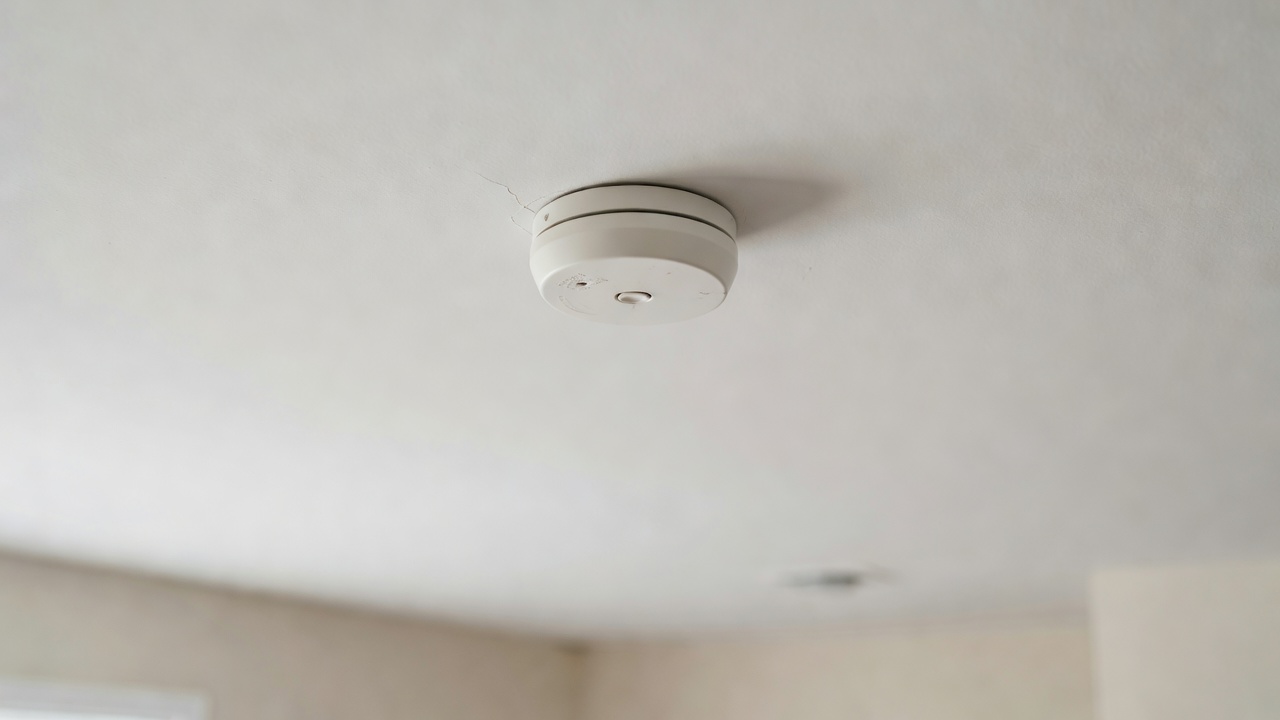
Few household items offer as profound a disparity between their visual appearance and their internal efficacy as the smoke detector. To the eye, a ten-year-old alarm looks identical to a brand new one. Its test button may still emit an ear-piercing shriek, and its indicator light may still blink with reassuring regularity. Yet, behind the plastic casing, the sensors that actually detect particulate matter have been degrading every second since the device was manufactured.
The industry standard across national fire protection organizations and safety agencies is unequivocal: entire smoke alarm units must be replaced ten years from their date of manufacture. Understanding why this rule exists requires looking at the two primary technologies that drive domestic fire detection: ionization and photoelectric sensing.
The Mechanics of Detection
Most homes rely on either ionization sensors, photoelectric sensors, or dual-sensor models that incorporate both technologies.
Ionization Sensors
Ionization alarms contain a microscopic amount of radioactive material—typically Americium-241—seated between two electrically charged plates. This setup ionizes the air, creating a continuous, measurable electrical current. When smoke from a fast-flaming fire enters the chamber, the particles disrupt this flow of ions, dropping the current and triggering the alarm. While the half-life of Americium-241 is over 400 years (meaning the radioactive source itself does not deplete), the physical chamber accumulates atmospheric dust, airborne cooking oils, and environmental moisture over a decade, which fundamentally alters the baseline conductivity of the chamber. Over time, the alarm either becomes overly sensitive (leading to nuisance alarms) or dangerously unresponsive.
Photoelectric Sensors
Photoelectric models aim a beam of LED light inside a sensing chamber at an angle away from a light sensor. When smoke from a slow, smoldering fire enters the chamber, the smoke particles scatter the light beam, reflecting it onto the sensor and triggering the siren. Like the ionization models, these chambers accumulate dust, insect debris, and humidity. While regular vacuuming can extend functionality, the optical sensors eventually degrade, and the physical buildup becomes impossible to clear entirely without disassembling and ruining the unit.
Hardwired vs. Battery-Operated
A persistent and dangerous myth is that hardwired smoke alarms—those integrated directly into a home's electrical grid—do not need to be replaced, or that they outlast battery-operated units. This is categorically false. The method of power delivery has no bearing on the degradation of the sensors.
While hardwired alarms do not suffer from the dreaded low-battery chirp in the middle of the night (provided their backup batteries are maintained), their sensing chambers suffer the exact same atmospheric accumulation and optical or ionization decay as a standalone battery unit. A hardwired alarm that is fifteen years old is just as compromised as a fifteen-year-old battery unit; it simply has a more reliable power source for its faulty sensor.
Identifying the Manufacturing Date
Because visual inspection cannot reveal the health of the internal sensors, the date of manufacture is the only reliable metric for replacement. Industry regulations mandate that this date be printed on the back of the alarm.
- Locating the Date: You must twist the unit off its ceiling or wall mounting bracket. Look for a stamped or printed date on the plastic backing.
- Calculation: If the date is more than ten years in the past, the unit is obsolete. If there is no date at all, the unit is almost certainly pre-dates modern regulatory standards and is drastically overdue for replacement.
- Sealed 10-Year Battery Models: Modern regulations in many jurisdictions now require new installations to use alarms with sealed lithium batteries designed to last exactly ten years. When the battery dies, the entire unit must be discarded, perfectly aligning the power source lifespan with the sensor lifespan.
In the context of household management, the smoke alarm represents a unique category. It is an appliance that operates entirely in the background, offering no daily utility, yet carrying the highest stakes of any device in the home. Respecting its ten-year lifecycle is a non-negotiable aspect of domestic safety.